

How To Properly Clean Fruit And Vegetables
Should you lot wash your fruits and vegetables with soap or detergent or is there a ameliorate, natural fashion to protect what you eat from possible pathogens
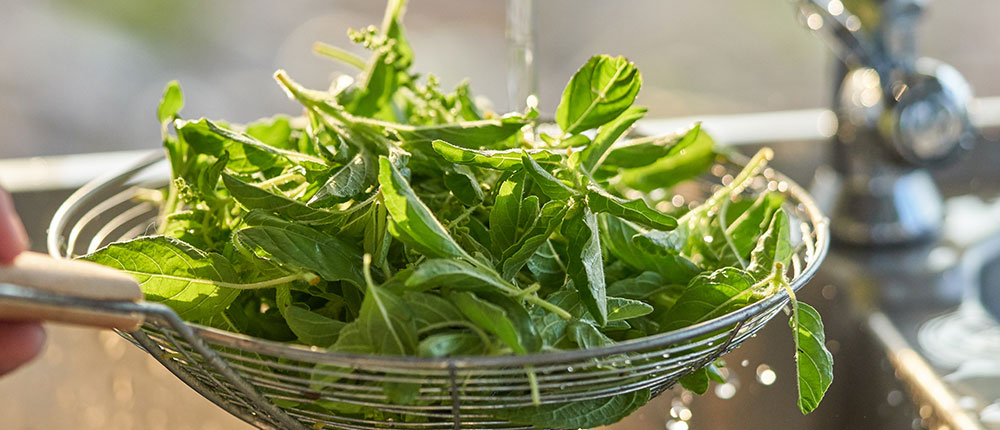
Washing fruits and vegetables has always been an important addiction to be followed at all times. In the current coronavirus pandemic, it has gained even more than importance and information technology is essential to at present have extra intendance while doing so. Some people are now even switching to vegetable washes, disinfecting liquids and detergents for fruits and vegetables rather than but washing in plain h2o. While many food scientists advise confronting the employ of chemical based products due to the potential risk of residues and chemical buildup, some suggest that a diluted balmy detergent solution tin can exist used with proper rinsing of fruits and vegetables with clean water, especially when chances of viral contamination are college. For food safety during coronavirus, nosotros take come up with a few tips on how to reduce microbial contamination of raw fruits and vegetables without any strong chemical based products.
i. Proceed the kitchen clean and safe
Clean the countertop, cut boards, and utensils later peeling produce and before cut and chopping. This is to prevent contaminants from the raw produce from being transferred inside during cut or peeling. Besides launder kitchen surfaces and utensils with hot, soapy water after cleaning vegetables.
Clean wooden chopping boards with vinegar or blistering soda to forbid microbial contamination of the same. If consuming non-vegetarian food, ensure that a different gear up of chopping boards, knives etc. are used in and that they are thoroughly done with hot water and lather afterward use.
2. Segregate fruits and vegetables this way
Class 1: Difficult-skinned fruits and vegetables: Such as oranges, assistant, pumpkin, yams, irish potato where pare is removed before consumption. Normally nosotros thoroughly rinse these with h2o and process/consume but under the electric current circumstances, these items demand special rinsing/cleaning procedures.
Class 2: Tender-skinned items: Such as grapes, tomatoes, radish, carrots etc. These are mostly consumed raw.
Grade 3: Leafy vegetables: Such every bit lettuce, spinach, methi and coriander.
Go out aside the plastic bags/paper bags/bear numberless etc. for at least 30 minutes after purchase. Avert bringing the purchase directly on the kitchen top. The appurtenances require farther processing before storage and consumption. Go on out of reach of children prior to processing.
3. Further treatment
Class 1 products
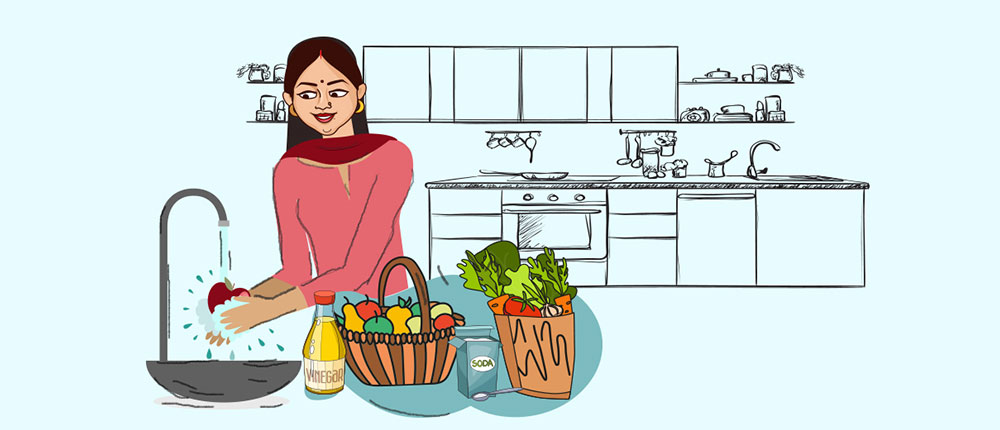
Launder hands thoroughly earlier and after handling raw fruits and vegetables.
Scrub the fruits and vegetables with a brush. Additionally, utilize baking soda for scrubbing. Then rinse with clean water. In add-on to germs, fruits similar apples may have a waxy coat introduced to enhance lustre. Brand sure to go rid of such additional chemicals from fruit surfaces.
Use mild detergent for washing and soaking Class 1 vegetables only - Utilize one table spoon of mild detergent in a saucepan of water. Soak the fruits and vegetables prior to touching. Rinse thoroughly with cold water several times. While rinsing, keep soaking in tubs to avoid wasting water. Residual detergent can be harmful hence please accept precautions.
Class 2 and 3 products
Employ one part vinegar in three parts h2o for washing and then rinse with clean water. Vinegar is besides known to reduce the microbes on vegetables and fruits. It works well for produce with smooth skin and for leafy greens.
Vegetables similar cauliflower and broccoli that accept nooks and crannies tin can also be soaked in the vinegar solution for at least five minutes and then rinsed with make clean water.
Squeeze one large lemon in 5 litres of water and soak tender vegetables for fifteen-20 minutes
Or
Ready a solution of 1/2 cup table salt and three tablespoon baking soda and soak vegetables for xv-20 minutes.
Rinse in enough of fresh water.
Food form sodium hypochlorite (NaOCl) solution (100 ppm) can exist used to soak vegetables like cabbage for two to v minutes before rinsing with clean water.
Decision
During the journeying from subcontract to consumer, fruits and vegetables are handled by multiple people and usually displayed in the open in markets. Every bit a outcome, they could be contaminated with microbes, soil, dirt, besides as pesticide residues. Cleaning them properly is thus an important step in staying salubrious. In light of the COVID-19 pandemic that has taken many lives, preventing contamination and cleaning with natural ingredients assumes even more than importance than before.

Source: https://www.teriin.org/article/food-safety-during-coronavirus-how-clean-fruits-and-vegetables-home
Posted by: villagomezwoperand.blogspot.com
0 Response to "How To Properly Clean Fruit And Vegetables"
Post a Comment